 TEXTILES.ORG





As event clients increasingly seek streamlined services under a single provider, dishware and tabletop rentals have evolved from nice-to-have offerings into a strategic extension of the rental business.
For Darren Randle, chief operating officer at Houston Tents & Events, adding dishware and tableware rentals started the same way most tent expansions do—with client demand. In Houston, Texas, tented events tend to scale up quickly. What begins as a straightforward structure often evolves into a full-scale production, and clients increasingly want fewer vendors, fewer handoffs and greater accountability from a single provider.
“We ultimately entered the tabletop category through the acquisition of A Finer Event, a long-standing local company focused primarily on tabletop rentals,” Randle says. “That acquisition accelerated our learning curve immediately. Dishware isn’t a passive add-on to tenting. It’s a discipline that requires structure, accountability and systems. In many ways, it strengthened how we operate the entire business.”
Since bringing dishware in-house, Houston Tents & Events has reduced SKU overload, improved warehouse flow, tightened inspection standards and invested more in staff training.
“Dishware stopped being treated like a supplemental offering and started being managed like core infrastructure,” Randle says. “During peak season, thousands of tabletop pieces move in and out alongside tents, flooring and power. Dozens of staff touch dishware across delivery, washing, inspection and restocking. Multiple large-scale tented events overlap constantly. Without strong systems, tabletop can quickly disrupt tent operations.”
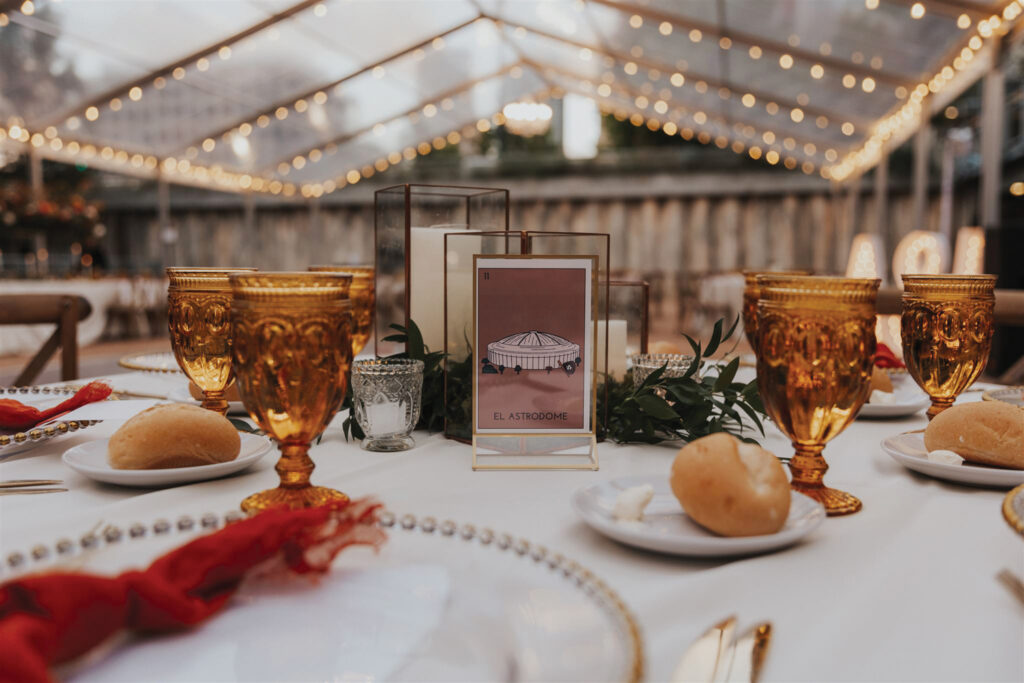
For Diane Korb, owner of The Vintage Dish in Montgomery, Texas, the path to tabletop rentals was far more personal. Korb has been collecting crystal, china and silverware for more than 20 years. During the COVID-19 pandemic, while stuck at home, she began purchasing even more pieces online.
“After the second or third large box was delivered, my wife asked me what I was going to do with these dishes,” Korb says. “I had toyed with the idea of starting a rental business in my head, so I told her I thought I’d use these for that business venture when I retire, giving myself a long runway. But then she said, ‘Why not just do it now?’ That sounded reasonable, so I did.”
Since then, Korb’s acquisition strategy has evolved into several china collections in distinct color families, plus sets of specialty products such as teapots, brass candleholders and tiered serving plates.
From the beginning, Korb balanced her appreciation for the beauty of vintage china with the reality that these items are old, finite and fragile.
“They’re rare—just a finite number of them are floating around on the planet, and I’m overjoyed when I find a set of seven plates I’ve never seen before. I always aspire to find more but live with the realization that I may not,” Korb says. “I have been fortunate enough to purchase a few collections from a descendant of an original owner and hear the story of the china.”
The emotional connection is something Korb’s clients and their guests frequently experience as well.
“I hear how much nostalgia exists in a teacup or dinner plate,” she says. “Recognizing a pattern takes them immediately back to their aunt’s house and Sunday meatloaf. I absolutely love to hear someone share a memory associated with a vintage dish. It warms my heart every time.”
Inventory decisions
Grand Event Rentals, based in Bothell, Wash., introduced dishware and tableware to its inventory in 2001 with just one plate line and one glassware collection. Today, the company carries 10 different plate lines, nine silverware collections and seven glassware options.
“Every year, we decide what collections to add, discontinue or increase inventory of. If a collection is discontinued, we will research current trends to replace it,” says Eddie Redman, owner of Grand Event Rentals. “This helps to keep our offerings fresh and up to date.”
When lines are discontinued, Grand Event Rentals sells or donates the inventory. In one instance, the company donated 300 place settings to a nonprofit that trains individuals for careers in the hospitality industry.
At Houston Tents & Events, inventory decisions are continuous and data-driven, with formal reviews conducted each season and after major event runs. If an item isn’t renting consistently, isn’t holding up to repeated use or slows down operations, it is quickly evaluated.
“From a tent operator’s perspective, versatility matters,” Randle says. “We prioritize tabletop inventory that works across weddings, corporate events and large outdoor installations—not niche pieces that complicate logistics or storage.”
When tabletop items are cycled out of inventory, Houston Tents & Events sells them to smaller rental companies or venues or donates them when appropriate.
“Like tents and structures, tabletop inventory must earn its space,” Randle says. “Storage, handling and labor all have real costs.”
However, at The Vintage Dish, inventory decisions are shaped by a different set of constraints, namely demand and storage capacity.
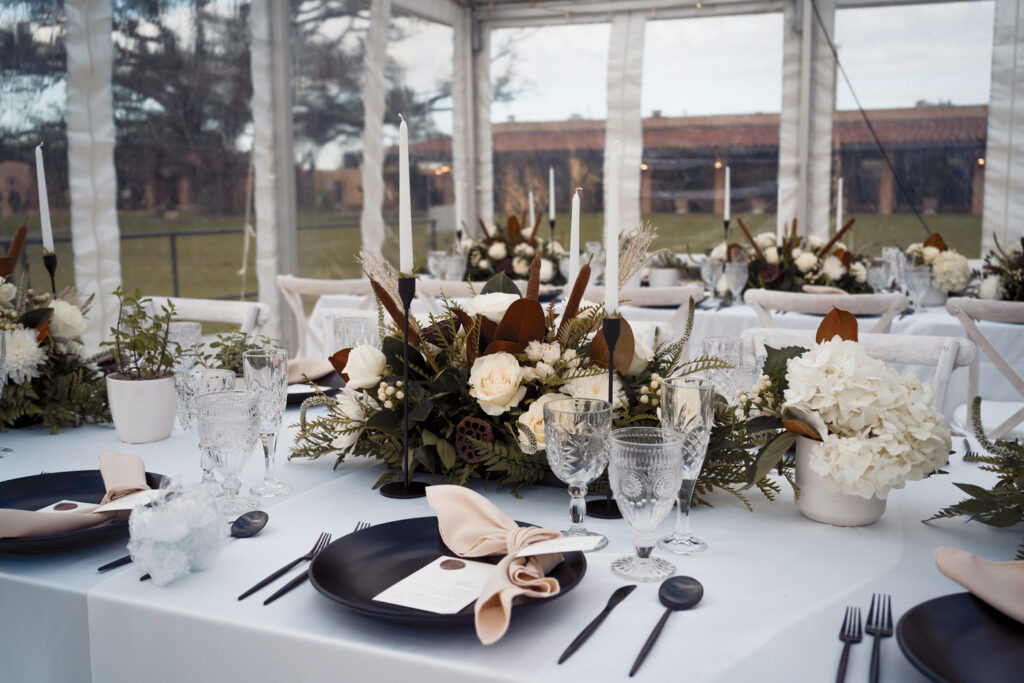
“Demand for tea parties continues to grow, and the size of the events keeps increasing,” Korb says. “My teacup inventory is now around 250 cups, and I’m still actively looking for more. I am also very particular about the size of dinner and salad plates that I purchase to allow for flexible pairings.”
That selectivity sometimes means letting go of pieces she loves. “I’ve had to retire china patterns that are so pretty but don’t coordinate well with my product collections due to size or color,” she says. “It breaks my heart, but storage space takes priority.”
When dishware is retired at The Vintage Dish, Korb gives away broken and chipped items. Undamaged pieces are either repurposed into tiered serving plates or sold through secondary markets. “I strive for minimal waste,” she says.
Cleaning and maintenance
At Houston Tents & Events, the post-event cleaning is industrial and process-driven. The company relies on commercial dishwashing equipment designed for volume, professional detergents specific to china, glassware and flatware, and trained staff who understand washing is only part of the job.
“For tent operators, the key realization is this: Washing is quick; inspection is not. Every piece is handled, checked, dried, racked and staged for the next event,” Randle says. “After large tented weekends, dishware processing can extend several days beyond strike.”
Inspection is where most labor is spent. Lipstick marks, water spots and hairline cracks are only caught through hands-on inspection, and even a single missed defect is highly visible under event lighting.
Items that pose the greatest maintenance challenges include etched glassware, gold-rimmed pieces, specialty finishes and narrow-mouth glasses.

“They photograph well but demand slower wash cycles, more labor and more careful handling. Like specialty tent inventory, they must be justified operationally, not just aesthetically,” Randle says.
Both vintage and contemporary dishware require similar care, although vintage items carry greater risk. Crystal and silver must be hand-washed, and while china can go into a dishwasher, paint and gilding loss is always a concern.
“I have to weigh that risk against the volume of dishes requiring cleaning after an event,” Korb says. “Breakage and loss are risks at every event. It’s not limited to fine crystal.”
Korb washes dishes immediately upon return to prevent pests or mold. Some pieces require prerinsing before machine washing on a gentle cycle. She also washes fabric liners, padding and crates before storing them, tallying and inspecting each item for damage or loss.
“Then I wash silverware and glassware by hand,” she says. “It can take several weeks to fully process an order. During busy seasons, I have to prioritize based on upcoming deliveries.”
Because vintage pieces are difficult if not impossible to replace, Korb includes a refundable security deposit starting at $99 with every order.
“I have to consider the cost of replacing multiple items if something happened to an entire crate of dishes,” Korb says. “I’ll research comparable patterns online, deduct replacement costs and refund the remaining balance.” Clients are sometimes surprised by the time required to complete inspection and reconciliation. Korb has received calls just days after an event regarding the status of a security deposit.
“While I do wash dishes rapidly after an event, glassware may not rise to the top of the list depending on other order fulfillment priorities, so it may take me three to four weeks to fully process a return order,” Korb says.
For Grand Event Rentals, improperly scraped plates are among the most difficult items to clean.
“Food residue can become very difficult to remove and requires extra labor,” Redman says. “Glassware can develop spots depending on water temperature and drying detergents, so inspection is critical.”
Every piece—plates, flatware, glassware, serving equipment—is spot-checked before being shelved. “This attention to detail ensures there are no cracks, chips or imperfections,” Redman says. “We expect our clients to receive the highest quality possible.”
During peak season, Grand Event Rentals employs eight to 10 people in the dish department, packing and cleaning as many as 200 orders a week. “Many items are turned around within 48 hours to go right back out,” Redman says.

Lessons learned
One thing Randle wishes he had known earlier is that dishware is fundamentally a logistics business disguised as a rental business.
“If you don’t respect that from day one, with proper systems, labor planning and inspection standards, it will quietly cost you time, money and operational focus,” Randle says. His advice to other tent rental companies is simple: Don’t do it halfway and don’t try to serve everyone.
“Not all tabletop business is good business,” Randle says. “Some expectations around turnaround time or replacement responsibility don’t align with how a professional operation must function at scale. Being selective matters.”
For Korb, the biggest lesson has been understanding that cohesive vintage inventory can’t be built through traditional supply chains.
“Mismatched china adds time to the fulfillment process,” she says. “Shape, size and colors all matter. While mismatching may appear random, it’s actually very selective.”
Redman agrees that discipline is essential when expanding tabletop offerings. His advice is to start small.
“As you do larger volumes, up quantities of each piece before adding an additional collection,” Redman says. “If you have friendly competitors, purchasing a style they carry can allow you to sub-rent a higher quantity for an event without having to purchase it. And make sure you buy a durable and readily available style to ensure longevity of the inventory you carry.”
Maura Keller is a freelance writer based in Minneapolis, Minn.